Sedum (Stonecrop)
Upright garden sedum — botanically reclassified as Hylotelephium though still widely sold under the older name Sedum — is built from thick, succulent, water-storing foliage topped in late summer with broccoli-like flower heads that slowly deepen from soft pink to deep rust as they age into fall.
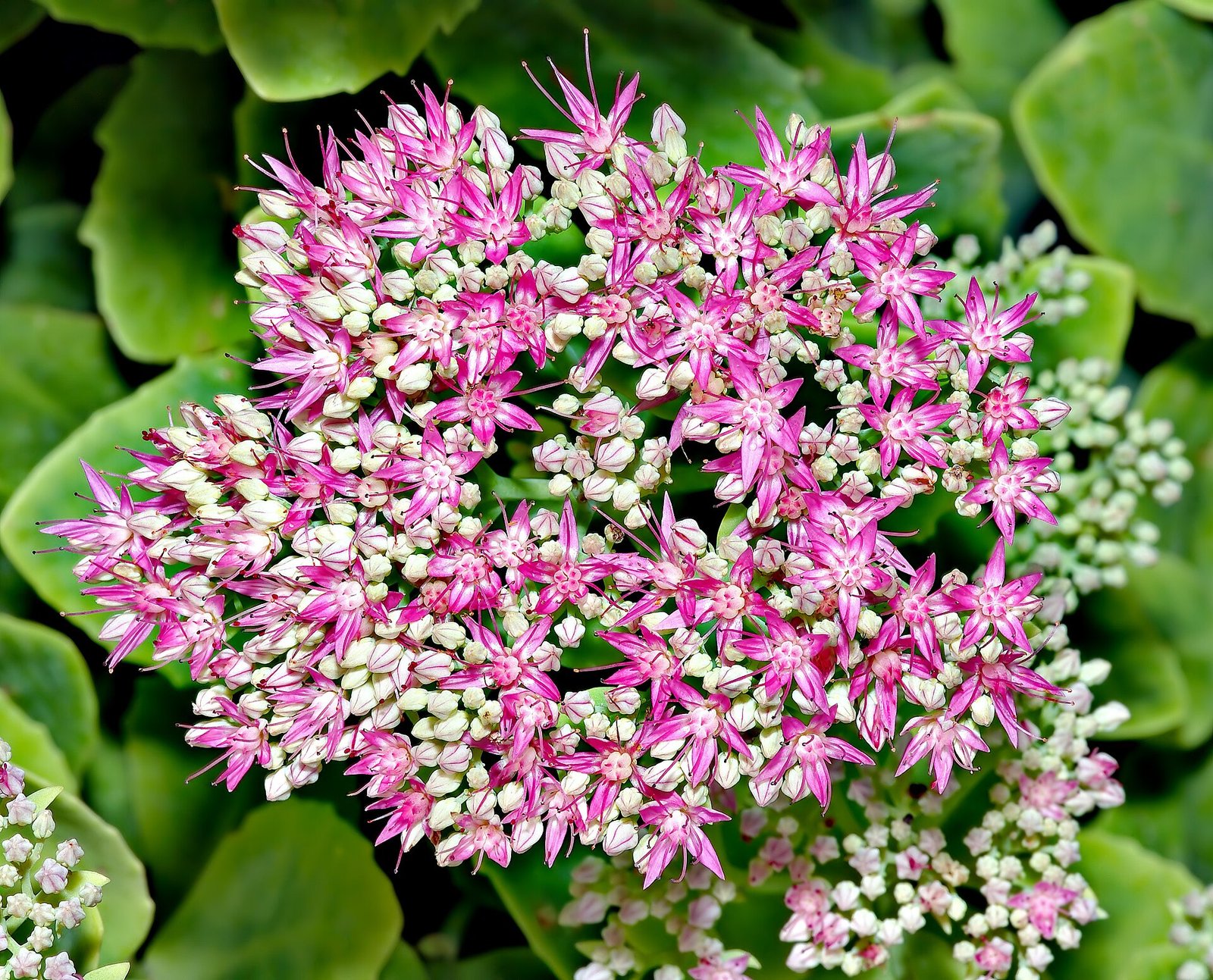
| Scientific name | Hylotelephium spp. (syn. Sedum spp.) |
|---|---|
| USDA hardiness zones | 3–9 |
| Height | 1–2 ft |
| Width | 1.5–2 ft |
| Bloom period | Late summer through fall |
| Flower color | Pink, deepening to rust-red as it ages |
| Sun requirements | Full sun |
| Soil requirements | Lean, well-drained; tolerates poor, rocky soil |
| Water requirements | Low; highly drought tolerant |
| Maintenance level | Low |
Planting Sedum
Plant in spring or fall in full sun and well-drained soil. Sedum genuinely prefers lean, even poor soil — it's one of the best options for a rocky, sandy, or difficult site where richer soil isn't available. Space plants 18 to 24 inches apart.
Watering
Water regularly for the first few weeks after planting, then taper off. Established sedum is exceptionally drought tolerant thanks to its water-storing succulent foliage, and overwatering is a far greater risk to this plant than underwatering.
Fertilizing
Not recommended in most soils. Fertilizing, and even planting in overly rich soil, tends to produce tall, weak stems that flop open in the middle — a common complaint with this plant that's almost always a soil fertility issue rather than a plant defect.
Pruning: The "Chelsea Chop"
To prevent the floppy, open-centered growth habit mentioned above, many gardeners cut the plant back by about half in late spring (a technique sometimes called the "Chelsea chop"). This delays and often improves bloom, and results in a shorter, sturdier, more compact plant that's much less likely to splay open under its own weight later in the season. It's optional — skipping it still produces flowers, just on a looser, floppier plant.
Propagation
Divide clumps every four to five years in spring. Stem cuttings also root easily in a well-draining mix, since the succulent stems store enough moisture to survive while forming new roots.
Common Pests and Diseases
Very few pest or disease issues. The main problem is crown or root rot from soil that stays too wet, particularly over winter, which is largely avoidable with good drainage. It's also notably resistant to deer and rabbit browsing.
Winter Care
Fully hardy within its zone range. Leave the dried flower heads and stems standing over winter — they hold their structure well in frost and snow and provide some visual interest in an otherwise bare season, then cut back in early spring before new growth starts.
Companion Plants
Its late bloom timing complements earlier-flowering perennials — pair it with Russian sage, which is often still blooming as sedum peaks, or coneflower and black-eyed Susan for a full spring-through-fall succession in a sunny bed.
Garden Uses and Benefits
An essential plant for extending color into fall — see our full guide to perennial flowers for fall — and a strong late-season nectar source for bees and migrating monarch butterflies, covered in our bee and butterfly guides.
Potential Problems
- Floppy, open-centered growth in overly rich soil or too much shade
- Crown rot in poorly drained or overly wet soil
- Slower to establish visually than some perennials, since much of its early energy goes into the root system
Frequently Asked Questions
Why does my sedum flop open in the middle?
This is almost always caused by soil that's too rich or fertile, or not enough direct sun. Sedum wants lean soil and full sun to stay compact; cutting the plant back by half in late spring (the "Chelsea chop") also produces sturdier, less floppy growth later in the season.
Is sedum the same plant as low-growing groundcover sedum?
Not quite — upright garden sedum, covered here, has been reclassified into the genus Hylotelephium and grows as an upright clump 1 to 2 feet tall. Creeping groundcover types often still sold as Sedum stay low and spread horizontally; both are succulent and drought tolerant, but they're used differently in a garden.