Lavender
Lavandula angustifolia and its relatives are grown as much for fragrance as for flower. Silvery, narrow foliage tops a dense, low mound, and in early-to-midsummer it sends up narrow spikes of small purple-blue flowers that hold their color and scent well after cutting and drying.
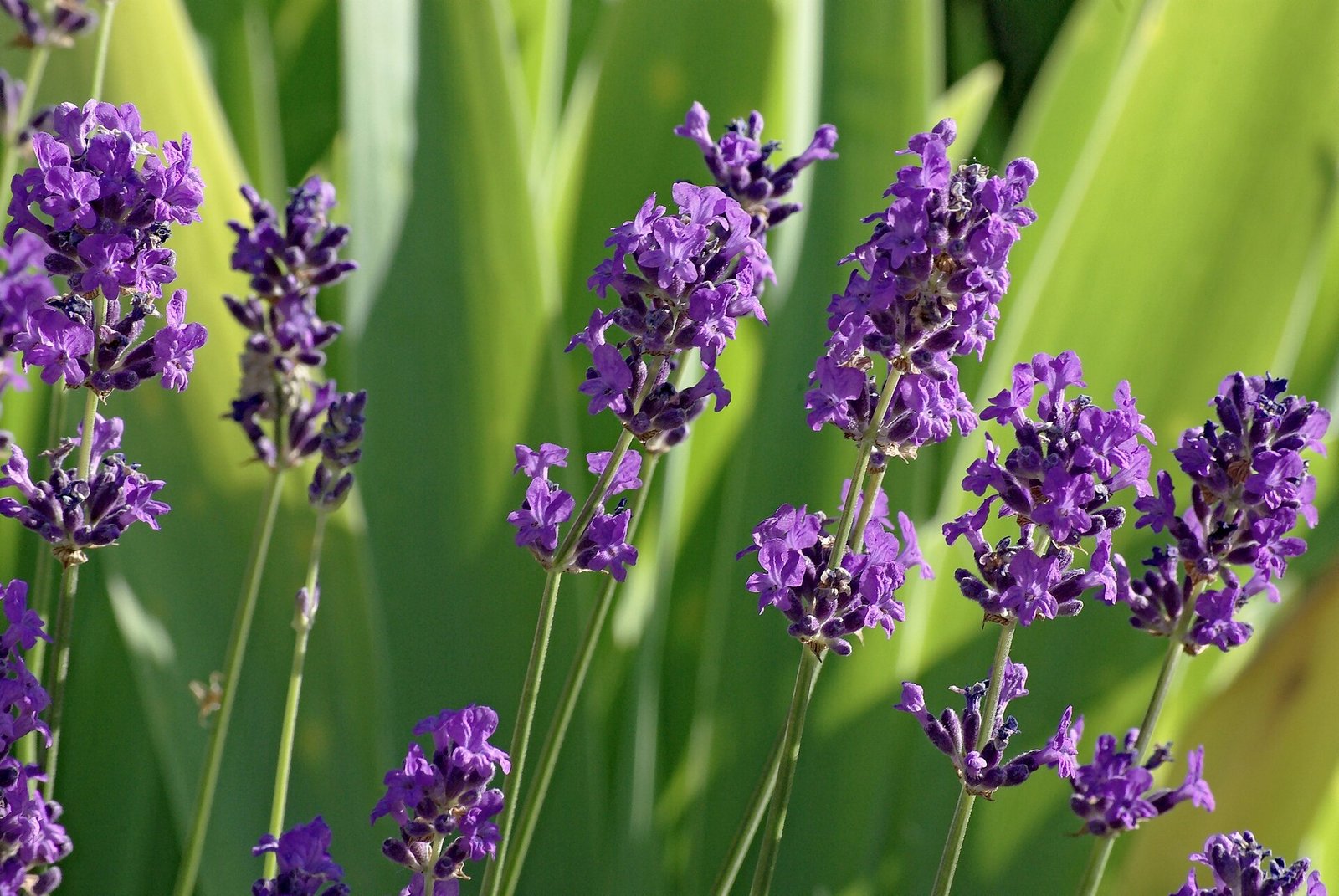
| Scientific name | Lavandula angustifolia (English lavender) |
|---|---|
| USDA hardiness zones | 5–9 |
| Height | 1–3 ft |
| Width | 2–3 ft |
| Bloom period | Early to midsummer |
| Flower color | Purple, blue-purple; some cultivars white or pink |
| Sun requirements | Full sun (6+ hours) |
| Soil requirements | Lean, sandy or rocky, sharply drained; tolerates poor soil |
| Water requirements | Low once established; drought tolerant |
| Maintenance level | Low, aside from an annual prune |
Planting Lavender
Drainage is the single most important factor for lavender. Plant in spring after the soil has warmed, in a spot that gets full sun and never holds standing water after rain. If your soil is heavy clay, either plant in a raised bed or mound, or work coarse sand and small gravel into the planting area to improve drainage — don't add compost or rich organic matter the way you would for most perennials, since lavender performs worse in overly fertile soil. Space plants 18 to 24 inches apart to allow good air circulation, which reduces fungal problems.
Watering
Water regularly through the first growing season while roots establish, letting the soil dry between waterings. Once established, lavender needs supplemental water only during extended drought — overwatering, far more than underwatering, is the most common way gardeners kill an established plant.
Fertilizing
Little to none is needed. A light topdressing of compost in spring is optional; heavy fertilizing produces soft, floppy growth and fewer flowers, and can shorten the plant's lifespan.
Pruning
Prune lavender every year, ideally right after flowering finishes or in early spring before strong new growth starts. Cut back by about a third, shaping the plant into a rounded mound, but avoid cutting into old bare wood — most lavender varieties won't reliably resprout from wood that no longer has leaves, so an unpruned, overgrown plant can develop a permanently woody, sparse center that never fills back in.
Propagation
Softwood cuttings taken in late spring or early summer root reliably in a well-draining mix and are the standard way to propagate lavender true to type, since named cultivars don't always come true from seed.
Common Pests and Diseases
Lavender has few serious pest problems; its strong scent deters many browsing animals, including deer and rabbits. The real threat is root rot from poorly drained soil or overwatering, which shows up as blackened stems at the base and sudden wilting — by the time it's visible, the plant usually can't be saved, which is why prevention through good drainage matters more than treatment.
Winter Care
In zones 5 and 6, winter wet is more dangerous than winter cold — a thick layer of mulch that holds moisture against the crown can rot the plant faster than an unmulched plant in the same cold. Use a light, airy mulch like pine straw if you mulch at all, and avoid mounding wet mulch directly against the stems.
Companion Plants
Pairs well with other Mediterranean-type, sun-loving, drought-tolerant perennials that share its drainage needs — Russian sage and sedum are both good bed-mates that won't compete for water the way a moisture-loving plant would.
Garden Uses and Benefits
Common as a low hedge or border edging, in rock gardens, and in dedicated cutting gardens for dried arrangements and sachets. It's also one of the most reliable perennials for attracting bees; see our guide to perennial flowers for bees.
Potential Problems
- Root rot from poor drainage or overwatering — the most common cause of death
- Legginess and bare woody centers from skipping annual pruning
- Poor bloom in gardens with less than six hours of direct sun
- Winterkill in zones colder than 5 without extra protection or a hardier cultivar
Frequently Asked Questions
Why is my lavender dying in the middle?
This is usually age combined with skipped pruning — lavender left unpruned for several years develops a woody center that stops producing new growth. Regular annual pruning that keeps some green growth on every stem helps prevent it, but a plant that's already gone fully woody in the center generally needs to be replaced rather than rejuvenated.
Can lavender survive winter in a cold climate?
English lavender (Lavandula angustifolia) is generally hardy to zone 5, sometimes zone 4 with a very sheltered site and reliable snow cover. Colder than that, it's best treated as an annual or grown in a container that can be moved indoors for winter — see our guide to perennials in pots.