Purple Coneflower
Echinacea purpurea is a North American prairie native — a daisy-form flower with drooping pink-purple petals surrounding a raised, spiny copper-orange cone. It's one of the toughest, most widely adapted perennials sold, and one of the best for feeding pollinators and birds.
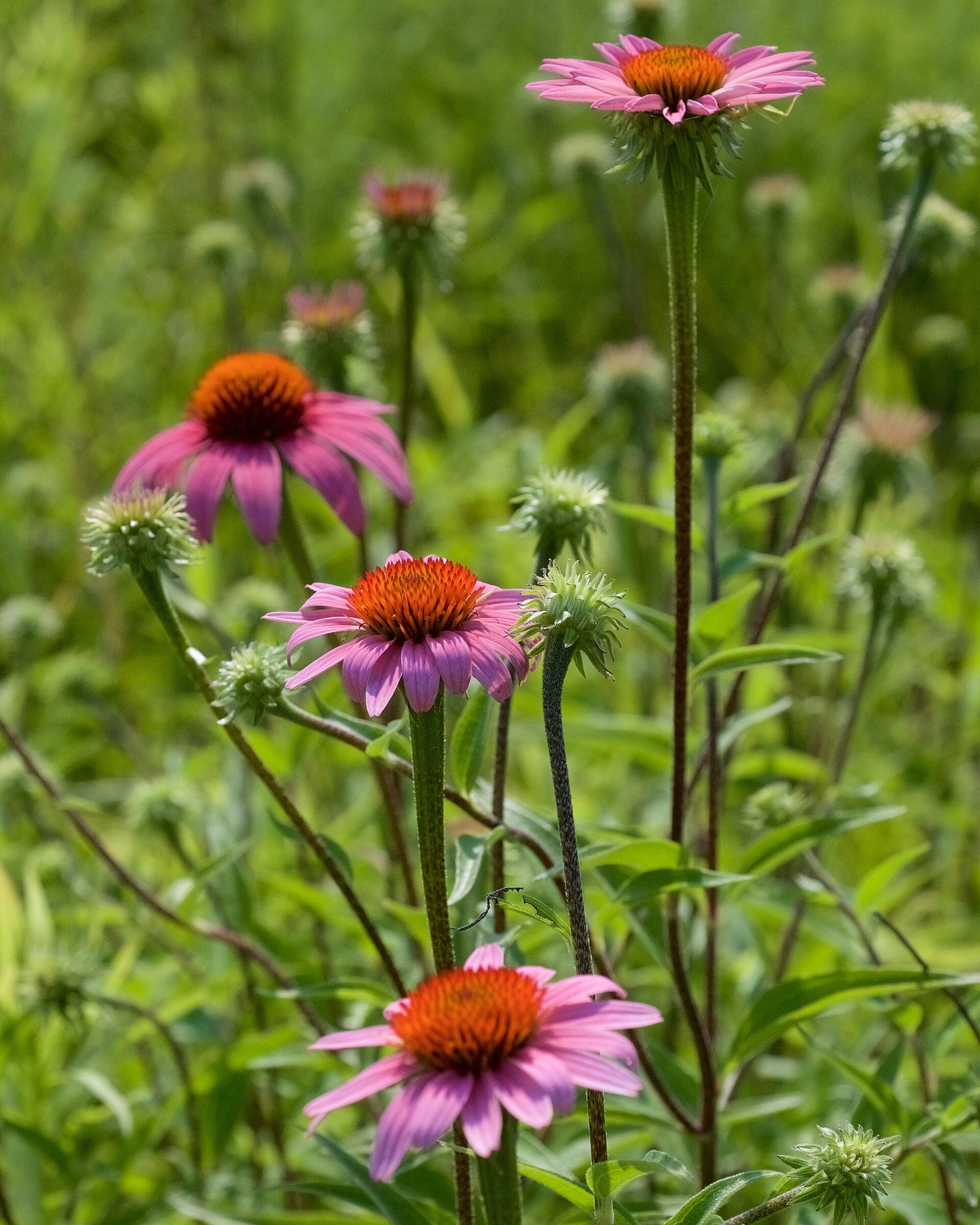
| Scientific name | Echinacea purpurea |
|---|---|
| USDA hardiness zones | 3–9 |
| Height | 2–4 ft |
| Width | 1.5–2 ft |
| Bloom period | Midsummer through fall |
| Flower color | Pink-purple; cultivars in white, orange, yellow, red |
| Sun requirements | Full sun |
| Soil requirements | Tolerant of average, poor, or clay soil; must drain reasonably well |
| Water requirements | Low to moderate; drought tolerant once established |
| Maintenance level | Low |
Planting Coneflower
Plant in spring or early fall in full sun. Coneflower is genuinely unfussy about soil — it will grow in average, sandy, or clay soil as long as it isn't waterlogged for long periods. Space plants 18 to 24 inches apart; they fill in over two to three seasons and can look sparse if crowded too tightly at planting.
Watering
Water regularly through the first season. After that, coneflower's deep taproot — a legacy of its prairie origins — lets it handle dry spells with little supplemental water. Overwatering in heavy, poorly drained soil is more likely to cause problems than underwatering.
Fertilizing
Rarely necessary. A spring topdressing of compost is enough for most soils; heavy fertilizer tends to produce floppy stems without meaningfully improving bloom.
Deadheading and Pruning
Removing spent flowers encourages more blooms and extends the flowering window into fall. Many gardeners stop deadheading by late summer and leave the remaining seed heads standing through fall and winter — they're a genuine food source for goldfinches, and the dried seed heads add winter structure to the garden. Cut the whole plant back to the ground in late fall or early spring.
Propagation
Divide established clumps every three to four years in spring or fall to keep the center of the plant vigorous. Coneflower also self-seeds readily; volunteer seedlings can be transplanted or thinned depending on how much spread you want.
Common Pests and Diseases
Generally trouble-free, though watch for aster yellows, a phytoplasma disease spread by leafhoppers that causes distorted, greenish, malformed flowers. There's no cure — infected plants should be dug up and discarded (not composted) to prevent the disease spreading to nearby plants. Japanese beetles will feed on foliage and flowers in some regions but rarely cause lasting damage to an established clump.
Winter Care
No special winter protection is needed within its hardiness range. Leaving stems and seed heads standing over winter, rather than cutting back in fall, provides food for birds and shelter for overwintering beneficial insects.
Companion Plants
A natural match for other prairie-style perennials: black-eyed Susan and Russian sage share its sun and drought needs and bloom on a similar summer-into-fall timeline.
Garden Uses and Benefits
Works well in mixed borders, prairie-style or naturalistic plantings, and cutting gardens. It's a strong pollinator plant — see our guides to perennial flowers for bees and perennial flowers for butterflies — and the fall seed heads support birds through winter.
Potential Problems
- Aster yellows disease — remove and discard infected plants; no treatment exists
- Flopping in overly rich, fertile soil or too much shade
- Powdery mildew in humid climates with poor air circulation
- Can self-seed more aggressively than some gardeners want in ideal conditions
Frequently Asked Questions
Why are my coneflower blooms turning green and distorted?
This is the classic symptom of aster yellows, a disease spread by leafhoppers. There's no treatment — dig up and discard affected plants promptly, since they can serve as a source of infection for nearby plants.
Should I deadhead coneflower or leave the seed heads?
Both are valid. Deadheading through summer extends bloom by redirecting energy from seed production back into new flowers. Leaving the last flush of seed heads standing into fall and winter feeds goldfinches and other birds — many gardeners do both, deadheading through midsummer and then stopping.