Astilbe
Astilbe brings something most shade perennials don't: real vertical flower color. Feathery plumes in pink, red, purple or white rise above fern-like, deeply cut foliage in summer, but the tradeoff for that display is a genuine need for consistently moist soil.
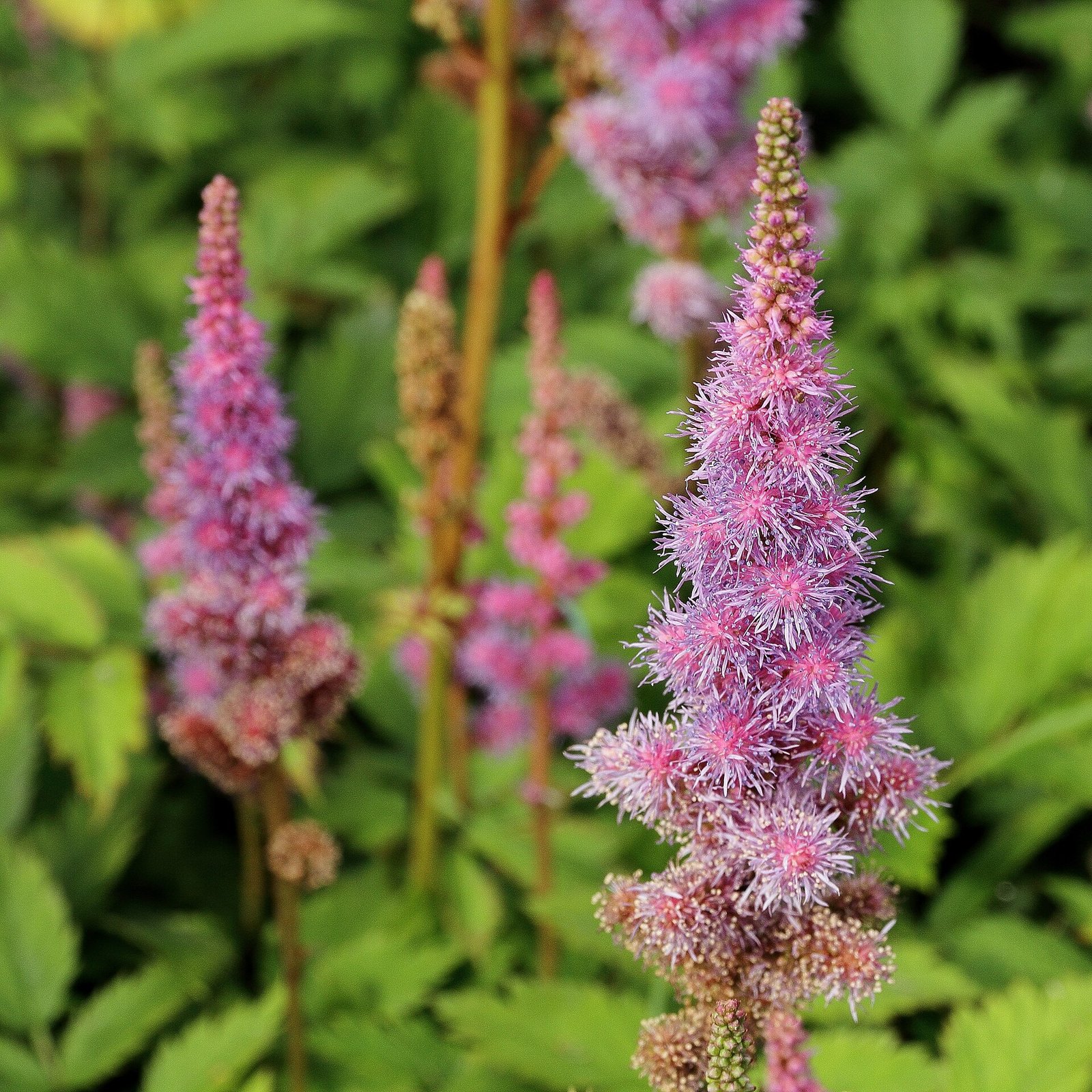
| Scientific name | Astilbe x arendsii and related hybrids |
|---|---|
| USDA hardiness zones | 4–9 |
| Height | 1–4 ft depending on variety |
| Width | 1.5–2.5 ft |
| Bloom period | Early to midsummer |
| Flower color | Pink, red, purple, white |
| Sun requirements | Part shade; morning sun with afternoon shade is ideal |
| Soil requirements | Rich, consistently moist, well-drained |
| Water requirements | High; not drought tolerant |
| Maintenance level | Medium — regular watering is non-negotiable |
Planting Astilbe
Plant in spring or fall in soil generously amended with compost or other organic matter, which helps hold the consistent moisture astilbe needs. Choose a spot with morning sun and afternoon shade, or dappled light all day — too much direct afternoon sun in a hot climate stresses the plant even with adequate water. Space plants 18 to 24 inches apart.
Watering
This is the plant's defining need: soil that never fully dries out. Water deeply and regularly, especially during summer heat, and consider a spot near a downspout or low area that naturally stays damper than the rest of the garden. Mulch heavily to slow evaporation. Skimping on water is the single most common reason astilbe underperforms or dies.
Fertilizing
A balanced fertilizer in spring, or a generous application of compost, supports the lush foliage and flower plumes astilbe is grown for.
Pruning
Deadhead spent flower plumes for tidiness, though some gardeners leave them for winter texture since they hold their shape well even dried. Cut the whole plant back to the ground in late fall or early spring.
Propagation
Divide clumps every three to four years in spring or fall — division also helps rejuvenate older clumps that have started blooming less, since the center can decline over time.
Common Pests and Diseases
Astilbe has relatively few pest problems and is notably resistant to deer and rabbit browsing, which makes it valuable in gardens where those animals are an issue. The main problem is entirely cultural: crispy brown leaf edges and stunted flower plumes are almost always a sign of insufficient water, not disease or pests.
Winter Care
Fully hardy within its zone range. A layer of mulch after the ground freezes helps protect shallow crowns from frost heave in colder parts of its range.
Companion Plants
Pairs naturally with hosta for foliage contrast and coral bells for a lower-growing color echo, since all three share similar shade and moisture preferences.
Garden Uses and Benefits
Ideal for a consistently damp shaded spot — along a shaded stream bank, near a downspout, or in a low-lying bed — where drier shade perennials would struggle. See our full guide to perennial flowers for shade for how to combine it with hosta and coral bells.
Potential Problems
- Brown, crispy leaf edges from insufficient water — the most common issue by far
- Reduced bloom in soil that dries out during flowering
- Stress and scorch in too much direct afternoon sun, especially in hot climates
- Declining vigor in an old, undivided clump
Frequently Asked Questions
Why is my astilbe wilting even in the shade?
Shade doesn't guarantee moist soil, especially under trees that compete for water. Astilbe needs consistently moist soil regardless of light level — check that the site isn't drying out between waterings and consider working in more compost or adding mulch to help retain moisture.
Is astilbe a good choice for a dry shade garden?
No — it's one of the worst choices for dry shade specifically. If your shaded spot is dry, especially under mature trees, hosta or coral bells are more tolerant options; astilbe should be reserved for shade sites that stay reliably moist.