Black-Eyed Susan
Rudbeckia fulgida is the true perennial black-eyed Susan — golden-yellow daisy flowers with a dark brown-black center, blooming from midsummer well into fall on a plant that's about as close to foolproof as perennials get.
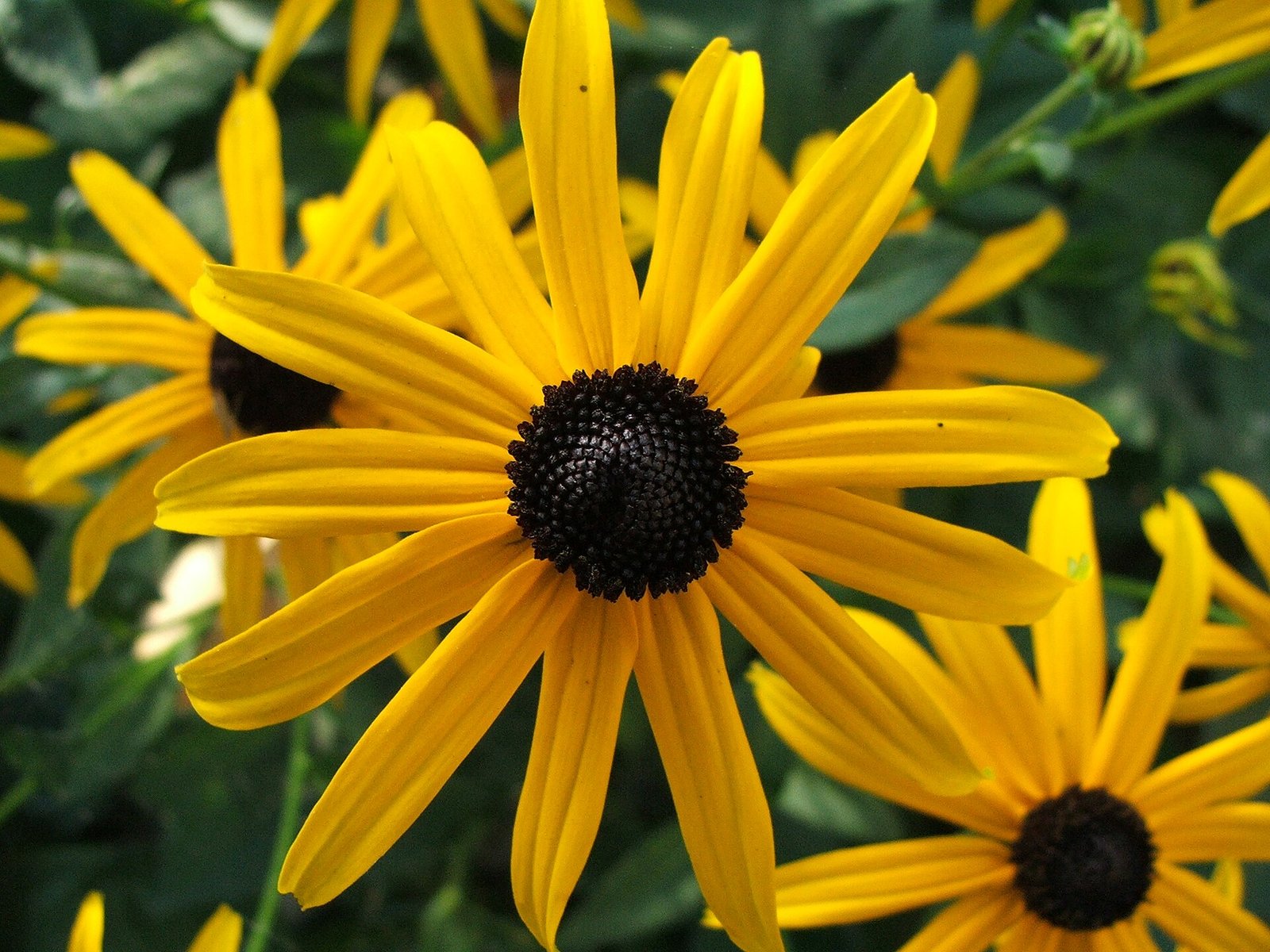
| Scientific name | Rudbeckia fulgida |
|---|---|
| USDA hardiness zones | 3–9 |
| Height | 2–3 ft |
| Width | 1.5–2 ft |
| Bloom period | Midsummer to fall |
| Flower color | Golden yellow with a dark brown-black center |
| Sun requirements | Full sun; tolerates light shade with reduced bloom |
| Soil requirements | Tolerant of average, poor, or clay soil |
| Water requirements | Low to moderate; drought tolerant once established |
| Maintenance level | Low |
Planting Black-Eyed Susan
Plant in spring or fall in full sun and almost any soil type — it's one of the least particular perennials about soil quality, tolerating clay, sandy, or rocky ground as long as it isn't permanently waterlogged. Space plants 18 inches apart; it spreads readily by both rhizomes and self-seeding, so tight initial spacing fills in faster than expected.
Watering
Water regularly for the first season. Once established, it tolerates dry spells well, though consistent moisture during bloom produces more flowers than a plant left to go fully dry for extended periods.
Fertilizing
Not usually needed in average garden soil. Skip heavy fertilizing, which can cause tall, floppy growth.
Deadheading and Pruning
Deadheading isn't required to keep the plant flowering through its long natural bloom window, but it tidies the plant's appearance and can reduce self-seeding if you don't want volunteer seedlings spreading. Cut the plant back in late fall or leave stems standing over winter for bird food and structure, then cut back in early spring.
Propagation
Divide clumps every three to four years in spring or fall — individual plants are relatively short-lived (often three to four years), but the clump persists and spreads through both division-worthy rhizomes and self-seeding, so a bed rarely goes empty even as individual plants decline.
Common Pests and Diseases
Generally trouble-free. Septoria leaf spot, a fungal disease causing dark spots on lower leaves, can appear in humid weather or crowded plantings with poor air circulation — thinning crowded clumps and avoiding overhead watering late in the day both help prevent it. Slugs occasionally damage young growth in wet springs.
Winter Care
No special protection needed within its hardiness range. It's fully hardy through zone 3 winters without mulching.
Companion Plants
Pairs naturally with other prairie-style perennials that share its sun and soil tolerance — purple coneflower and Russian sage both bloom on a similar summer-into-fall schedule.
Garden Uses and Benefits
A dependable choice for naturalistic borders, meadow-style plantings, and anywhere a bed needs long-lasting color without much intervention. It's a strong pollinator plant — see our guide to perennial flowers for bees — and a good pick for beginner gardeners.
Potential Problems
- Individual plants are short-lived (3–4 years); rely on self-seeding or division to maintain the bed
- Septoria leaf spot in humid, crowded conditions
- Can self-seed more than some gardeners want in ideal growing conditions
Frequently Asked Questions
Is black-eyed Susan an annual or a perennial?
Both names get used for different species. Rudbeckia fulgida, covered on this page, is a true perennial hardy in zones 3–9. Rudbeckia hirta, also commonly called black-eyed Susan, is usually grown as a biennial or short-lived perennial and often behaves more like an annual in cold climates. Check the plant tag's scientific name if the distinction matters for your garden.
Why did my black-eyed Susan patch disappear after a few years?
Individual plants naturally decline after three to four years. If the patch isn't self-seeding or being divided periodically, it can thin out and eventually disappear. Leaving some seed heads standing in fall, rather than deadheading everything, helps the colony renew itself.