Coral Bells
Heuchera is grown chiefly for ruffled, rounded foliage in colors from lime green to deep purple to amber, forming a low mound that holds interest for most of the year. In late spring and summer it sends up thin, wiry stems with small bell-shaped flowers that draw hummingbirds and bees.
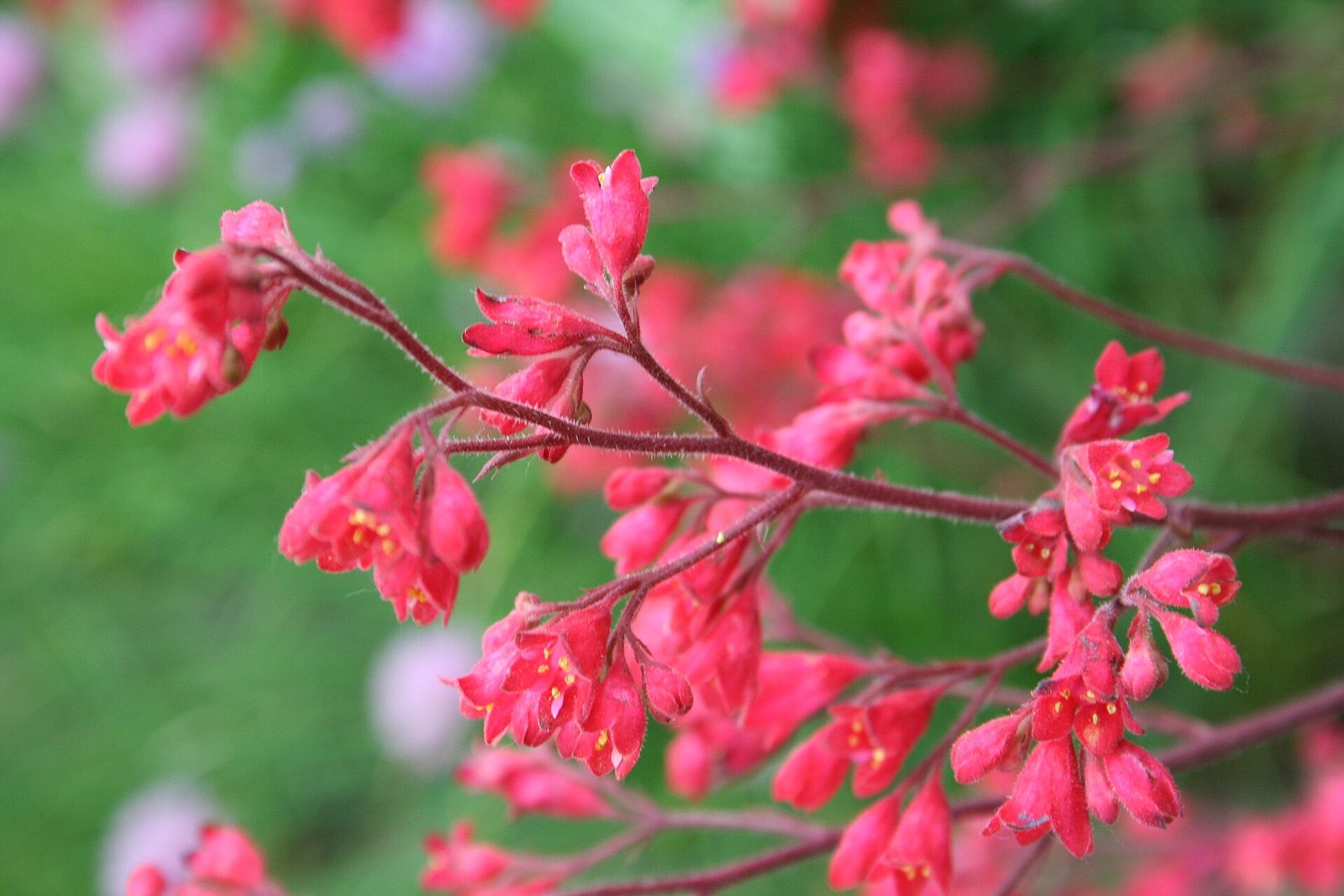
| Scientific name | Heuchera spp. and hybrids |
|---|---|
| USDA hardiness zones | 4–9 |
| Height | 8–18 in (foliage); flower stalks to 2 ft |
| Width | 1–1.5 ft |
| Bloom period | Late spring to summer |
| Flower color | Red, pink, white, coral (small, bell-shaped) |
| Sun requirements | Part shade; morning sun with afternoon shade |
| Soil requirements | Well-drained, moderately fertile |
| Water requirements | Moderate |
| Maintenance level | Low |
Planting Coral Bells
Plant in spring or fall in part shade with well-drained soil — good drainage matters more for coral bells than for many shade perennials, since its shallow crown is prone to rot in soil that stays soggy. Set the crown at soil level, not buried, since planting too deep encourages crown rot. Space plants 12 to 18 inches apart.
Watering
Moderate, consistent watering suits coral bells best — it's more drought tolerant than astilbe but less so than sedum, sitting in the middle of the range. Avoid letting soil stay soggy, which is a bigger risk to this plant than letting it dry out briefly.
Fertilizing
A light application of balanced fertilizer in spring is sufficient; coral bells doesn't need heavy feeding and can lose some of its best foliage color in overly rich soil.
Pruning
Remove flower stalks after bloom if you prefer to focus attention on the foliage, though leaving them doesn't harm the plant. Trim off any tattered or winter-damaged leaves in early spring as new growth begins.
Propagation
Divide every three to four years, which also solves the plant's most distinctive problem: crown heaving. Over a few winters, freeze-thaw cycles can gradually push an established coral bells crown up and out of the soil, exposing roots and reducing vigor. Dividing and replanting at the correct depth resets this.
Common Pests and Diseases
Relatively pest-free. The main disease concern is crown rot in poorly drained or overly wet soil, which is largely preventable by planting at the right depth in soil that drains well. Vine weevils can occasionally damage roots in some regions, showing up as sudden wilting with no clear cause.
Winter Care
Mostly evergreen or semi-evergreen in milder climates within its zone range. In colder areas, a light mulch after the ground freezes helps prevent the frost heaving described above, but avoid piling mulch directly over the crown.
Companion Plants
Its low, colorful mound works well as an edging plant in front of taller shade perennials like hosta and astilbe.
Garden Uses and Benefits
A strong choice for foliage color in a shaded border, along a path edge, or in a container — see our guide to perennials for pots. Its small flowers also make it a modest but useful addition to a pollinator-friendly shade garden.
Potential Problems
- Crown heaving from freeze-thaw cycles over several winters — divide and reset periodically
- Crown rot in poorly drained or overly wet soil
- Fading foliage color in too much shade or overly rich soil
Frequently Asked Questions
Why is my coral bells plant pushing up out of the soil?
This is frost heaving — repeated winter freeze-thaw cycles gradually push the shallow crown upward over a few seasons. It's common and not a sign of disease. Dig up and replant at the correct depth, and a layer of mulch in winter can help reduce the effect going forward.
Does coral bells need full shade?
No — most varieties do best in part shade with some morning sun, which actually deepens foliage color in many cultivars. Deep, all-day shade tends to produce weaker color and looser growth than a spot with a few hours of gentle morning light.