Hosta
Hosta is grown mostly for its foliage — broad, textured leaves ranging from a few inches to well over a foot across, in solid green, blue-green, gold, or variegated patterns. In summer it sends up flower spikes with small trumpet-shaped blooms in white or lavender, a secondary feature rather than the main attraction.
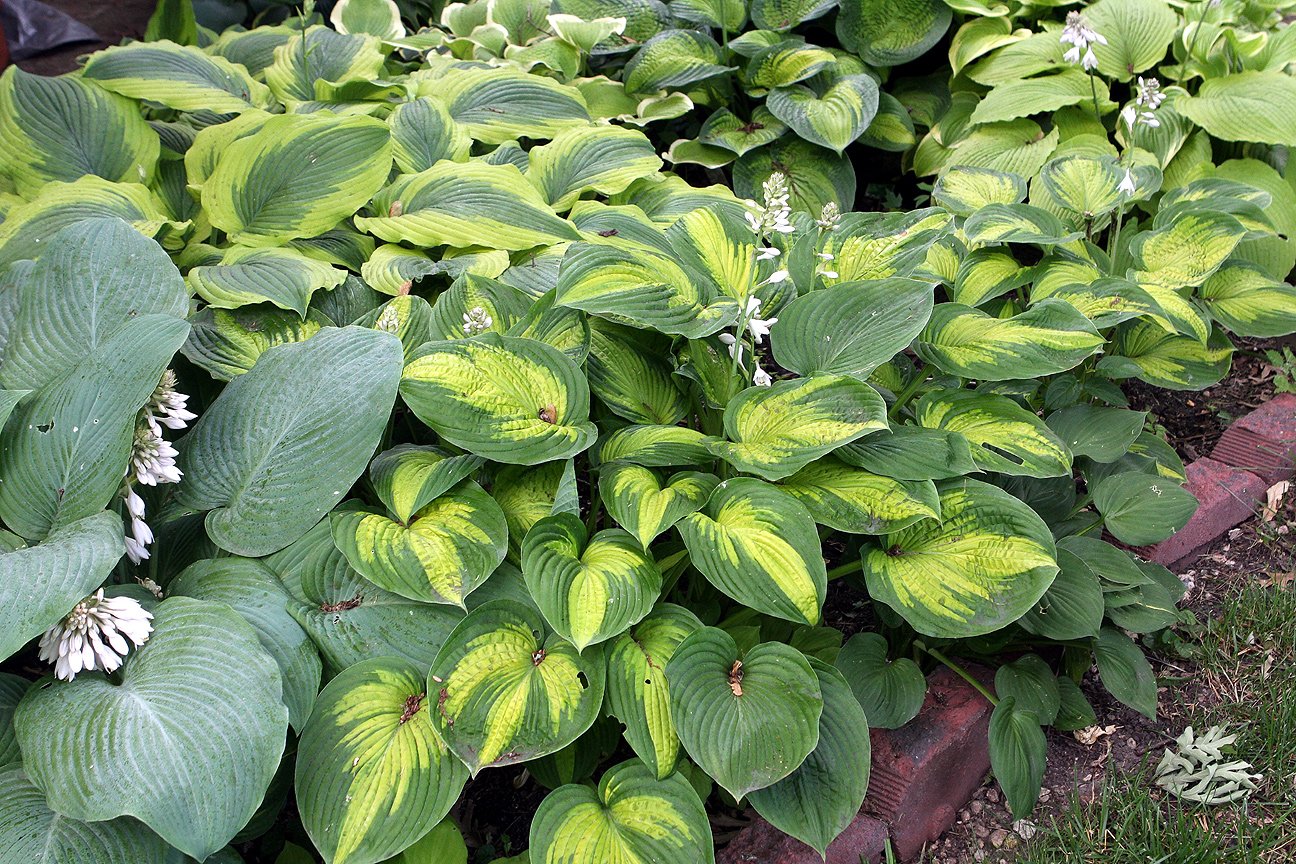
| Scientific name | Hosta spp. and hybrids |
|---|---|
| USDA hardiness zones | 3–9 |
| Height | 6 in – 3 ft depending on variety |
| Width | 1–4 ft depending on variety |
| Bloom period | Summer (flowers secondary to foliage) |
| Flower color | White or lavender |
| Sun requirements | Shade to part shade; some gold varieties tolerate more sun |
| Soil requirements | Rich, moisture-retentive, well-drained |
| Water requirements | Moderate to high; not drought tolerant |
| Maintenance level | Low, aside from slug management |
Planting Hosta
Plant in spring or fall in partial to full shade. Work compost into the planting hole, since hosta performs best in soil rich in organic matter that holds moisture without staying waterlogged. Spacing depends heavily on the variety — miniature hostas may need only 12 inches, while large varieties can eventually reach 3 to 4 feet wide and need that much room.
Watering
Hosta wants consistently moist soil, especially in its first two seasons. It is not a drought-tolerant plant; extended dry spells cause leaf scorch and browning at the edges. A layer of mulch helps retain soil moisture and keeps down weeds.
Fertilizing
A balanced, slow-release fertilizer in spring supports strong leaf growth. Rich, well-composted soil often makes additional fertilizer unnecessary.
Pruning
Little pruning is needed through the season beyond removing damaged leaves. Cut foliage back to the ground after it yellows and dies back in fall, since old leaves left in place can shelter slug eggs over winter.
Propagation
Divide clumps every four to six years in spring or fall, or as needed once a clump outgrows its space. Division is also the reliable way to propagate a named cultivar true to type, since hostas grown from seed don't always match the parent plant.
Common Pests and Diseases
Slugs and snails are hosta's best-known problem, chewing ragged holes in leaves, especially in damp weather and shaded, moist sites. Options include hand-picking at dusk, beer traps, iron phosphate slug bait, and copper tape barriers around especially prized plants. Deer also readily browse hosta in areas where they're a problem; fencing or repellents are usually more effective than trying to find a deer-resistant variety, since deer will eat most hostas given the chance.
Winter Care
Fully hardy within its zone range with no special winter protection needed. A layer of mulch after the ground freezes can help protect shallow roots from frost heaving in colder zones.
Companion Plants
A classic shade-garden combination with astilbe for vertical flower interest and coral bells for contrasting foliage color at a lower height.
Garden Uses and Benefits
The backbone of most shade gardens, valued for reliable, low-maintenance foliage where flowering perennials struggle. See our full guide to perennial flowers for shade for how to combine it with other shade-tolerant plants, and our guide to perennials for pots for compact varieties suited to containers.
Potential Problems
- Slug and snail damage, especially in damp, shaded sites
- Leaf scorch from insufficient water or too much direct sun
- Deer browsing in areas where deer pressure is high
- Crown rot in soil that stays waterlogged
Frequently Asked Questions
Why do my hosta leaves have holes in them?
Almost always slugs or snails, which feed at night and leave ragged holes, especially in wet weather. Hand-picking at dusk, iron phosphate slug bait, and reducing daytime moisture around the crown all help control them.
Can hosta grow in full sun?
Most varieties prefer shade to part shade and will scorch in hot, direct afternoon sun, especially blue-leaved cultivars. Some gold and yellow-leaved varieties tolerate more sun than average, but as a rule, hosta is chosen specifically for spots too shaded for sun-loving perennials.